
Power That
Moves Every Beat
Engineered for performance, reliability and pure sound. Built for every stage.

EXPLORE OUR AMPLIFIER SERIES
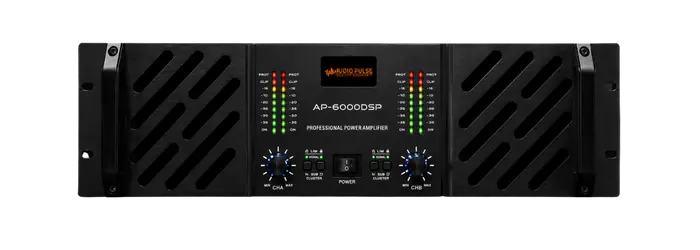
DSP SERIES
Advanced DSP control for precision tuning.
AP-6000DSP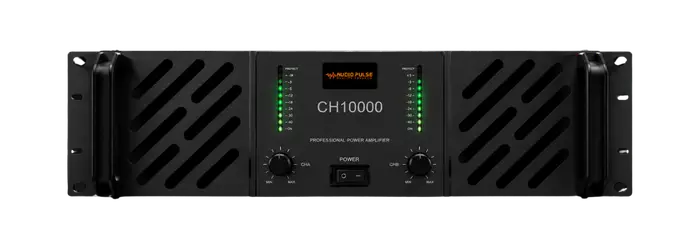
CH SERIES
High power. High performance. Built for every stage.
CH 6000 / CH 8000 / CH 10000 / CH 14000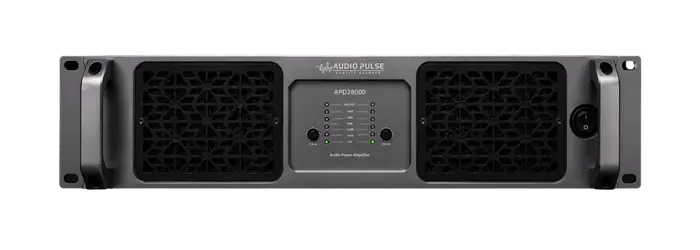
APD SERIES
Robust. Reliable. Road Ready. Engineered to perform.
APD-16000 / APD-28000 / APD-10000 / APD-14000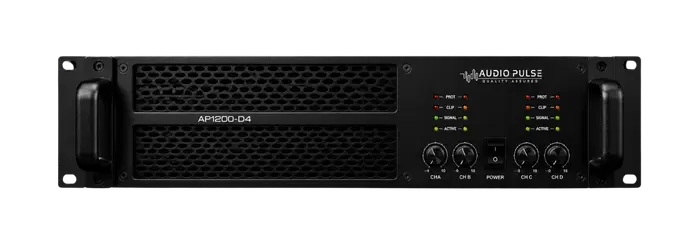
D SERIES
High efficiency Class D amplifiers.
AP1200-D4WHY CHOOSE AUDIO PULSE

Performance
High output with stable performance for all professional needs.

Premium components & rigorous testing for lasting reliability.

Technology
DSP control, PFC power supply & high efficiency design.

Protection
Multi-layer protection ensures safety for your equipment.

Quality
Low distortion, high damping factor for superior sound.

by Pros
Preferred by sound engineers & installers worldwide.
FREQUENTLY ASKED QUESTIONS
Audio Pulse offers several professional amplifier families for different PA and live-sound requirements. The CH Series covers CH6000, CH8000, CH10000 and CH14000; the APD Series includes high-power 2-channel and 4-channel models; AP-6000DSP adds filtering and operating-mode controls; and AP1200-D4 is a 4-channel Class D model. The right model depends on speaker impedance, required continuous power, channel count and system configuration.
According to the CH Series manual, rated stereo output at 8 ohms is 1500W x 2 for CH6000, 2000W x 2 for CH8000, 2500W x 2 for CH10000 and 2800W x 2 for CH14000. At 4 ohms the ratings are 2400W x 2, 3200W x 2, 4000W x 2 and 4500W x 2 respectively. Always match amplifier power and impedance to the loudspeaker system and follow the product manual.
Selected Audio Pulse models do. The APD Series is specified as 2-ohm stable, while the CH Series manual lists 2-ohm stereo ratings across CH6000, CH8000, CH10000 and CH14000. The AP-6000DSP manual also specifies a 2-ohm stereo rating. Use only configurations permitted for the exact model and provide adequate ventilation and correctly rated speaker cabling.
The APD Series is designed for demanding professional sound systems and combines high power density with a compact 2U chassis. Its manual specifies PFC, AC 100-240V ±10% at 50/60Hz, 2-ohm stability, front-to-rear temperature-controlled cooling, low-distortion performance and protection against clipping, over-voltage, DC output, short circuit and overheating.
No. The APD Series manual explicitly states that the APD-16000, APD-28000, APD4-10000 and APD4-14000 do not have bridge mode. They support stereo/mono operation as specified in the manual, so the outputs should not be wired as a bridged amplifier.
The AP-6000DSP is a 2-channel professional amplifier with XLR inputs, NL4/binding-post outputs, selectable operating modes and input sensitivity controls. Its rear-panel controls include adjustable high-pass and low-pass filtering from 30Hz to 3kHz, filter on/off controls and a 180-degree phase selector for system and subwoofer alignment.
The AP-6000DSP manual specifies 1500W x 2 at 8 ohms, 2400W x 2 at 4 ohms and 3150W x 2 at 2 ohms under the stated test conditions. It also lists 4800W at 8-ohm bridge and 6300W at 4-ohm bridge under the manual's bridge test conditions.
The AP1200-D4 is a 4-channel high-efficiency Class D professional power amplifier intended for applications such as bars, audio rooms, touring and theatres. Its specification sheet lists 1300W per channel at 8 ohms, 1900W per channel at 4 ohms and 2500W per channel at 2 ohms, together with overload, overheating, short-circuit, DC-output and peak-limiting protection.
Yes. The product range is designed around professional PA and sound-reinforcement applications, including touring, live performance, clubs, venues and fixed installations. Model selection should be based on loudspeaker impedance, required headroom, number of channels, cooling conditions and whether DSP/filtering or specific operating modes are required.
Protection varies by series. The APD manual lists clipping, AC over-voltage, DC output, VHP, short-circuit and overheat protection above 70°C. The AP1200-D4 specification lists soft start, overload, overheating, short-circuit, DC-output, peak-voltage limiting and intelligent peak-shaving protection. Front-panel protect and clip indicators help operators identify abnormal conditions.
Keep the front air intake and rear exhaust unobstructed. The APD manual specifies front-to-rear airflow and recommends sufficient free space around the amplifier; it also advises regularly cleaning or replacing the grille foam. Rack installations should provide adequate airflow, and amplifiers should not be covered or installed where heat cannot dissipate.
Start with the loudspeaker's nominal impedance, continuous power rating, number of cabinets per channel and required headroom. Choose an amplifier that is approved for the resulting load impedance and can supply appropriate clean power without sustained clipping. For a professional installation, confirm the final speaker wiring and amplifier configuration with the loudspeaker specifications or a qualified sound-system engineer.
Connections depend on the series. APD models use professional XLR inputs and Speakon outputs, while the CH Series manual lists XLR inputs with NL4 and binding-post outputs. AP-6000DSP uses XLR inputs and NL4/binding-post outputs. Always follow the pin assignments and wiring instructions for the exact model.
For Audio Pulse amplifier availability, model selection and sales enquiries in India, contact Audio Pulse directly at +91 98002 11988, email araudio2011@gmail.com or support@audiopulses.com, or use the WhatsApp contact available on this website.
